sudoku made easier
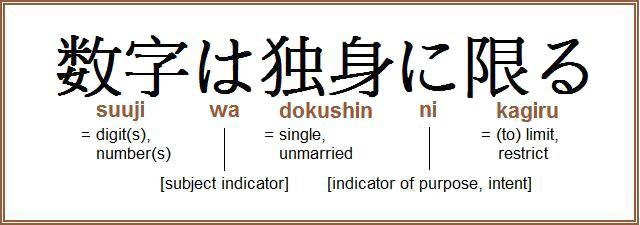
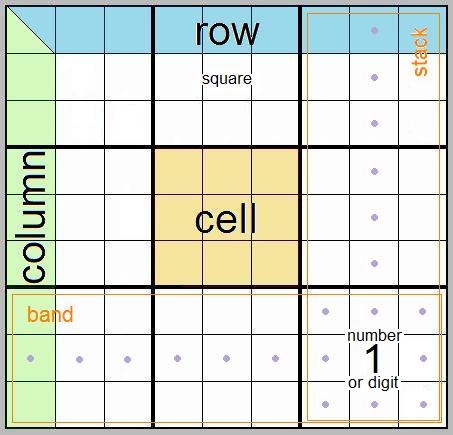
Sudoku (or su doku) is a contraction of the Japanese phrase suji wa dokushinsha ni kagiru which may be translated as meaning digits by themselves. Worldwide, the most popular sudoku puzzle grid is made up of nine cells (or boxes), each cell containing nine squares and arranged to form nine rows and nine columns. The challenge is to complete the grid so that every cell, row, and column displays the digits 1 to 9, in whatever necessary order. A few squares are filled in by the puzzle's setter. Typically, an 'elementary' puzzle may have some thirty digits supplied, though the number of squares filled does not necessarily determine the level of difficulty.
The elimination method
The elimination method is a good way for the newcomer to sudoku to gain confidence. It also aids the experienced solver when tackling stubborn puzzles. At any level, the technique offers an insight into the sudoku process.
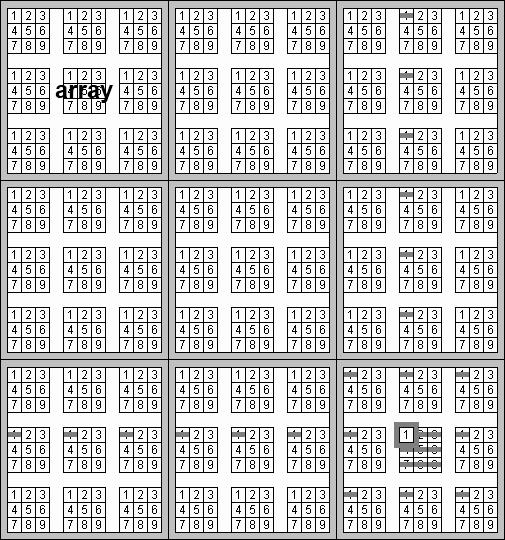
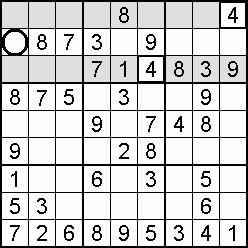
This page links to an elimination grid to print out and use as a portable puzzle sheet. On the elimination grid, every square of the puzzle is replaced by an array that gives the possible values of the square at the very start (1 to 9). To prime the grid, find the arrays which correspond to the squares filled by the setter, and 'promote' each array to the square's value by encircling the correct digit and striking out the other digits in the array.
Let the solving begin
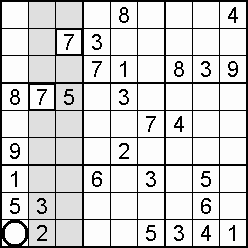
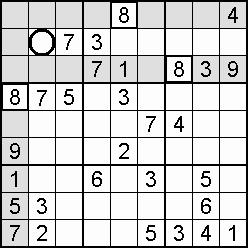
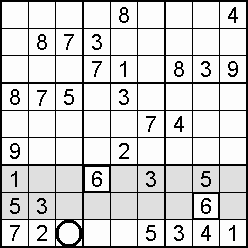
Within each cell, eliminate from the unpromoted arrays the value of any promoted array. For example, if the setter has supplied a 5, and the corresponding array has been promoted, then 5 is no longer a possibility for the other arrays in the same cell, and all the digits 5 can be deleted. The same logic applies for rows and columns: 5 can be removed from arrays in the same row across the grid, and in the same column down the grid. Once the procedure has been completed for all the values given by the setter, the number of available digits on the elimination grid (which is essentially a statement of possibilities) will be substantially reduced.
The search now begins for digits by themselves (sudoku). When, in an array, only one digit remains because the others have been eliminated, then that digit must be the value of the square of the puzzle. Promote the array. An array in a cell, row or column may carry a digit which, though not on its own, does not occur in any of the other arrays within the same cell, row, column. Again, promote the array in favour of that particular digit. Also, if a cell, row or column contains eight promoted arrays, then the ninth array, regardless of how many digits remain there, must carry the one value between 1 and 9 not already represented in the domain. A step-by-step example of the elimination method used in completing a fairly difficult asymmetric puzzle grid appears further down this page.
Some advanced solving
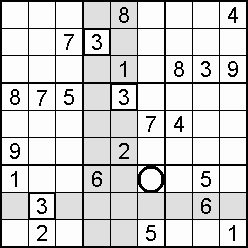
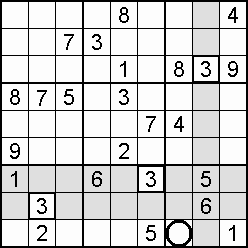
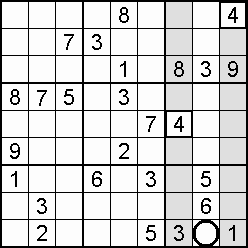
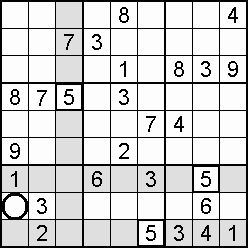
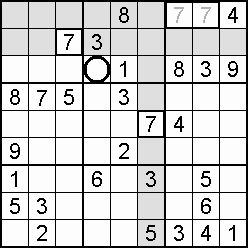
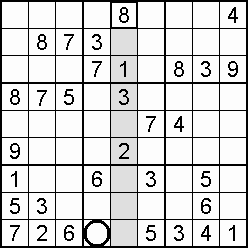
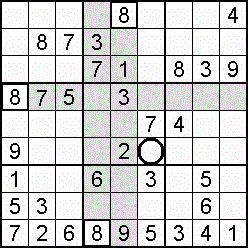
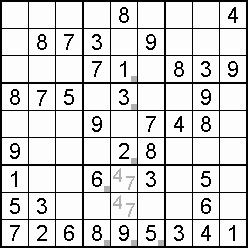
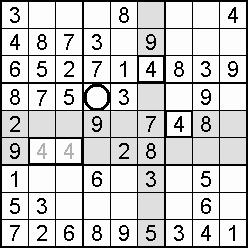
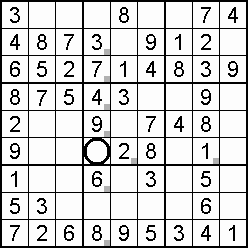
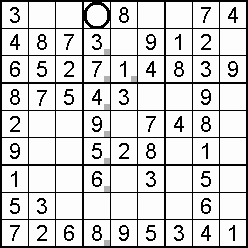
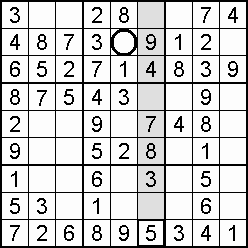
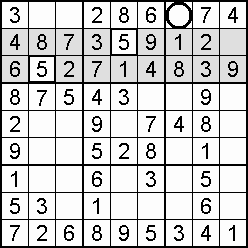
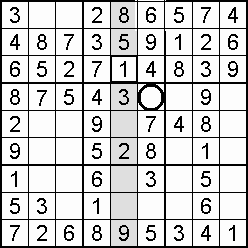
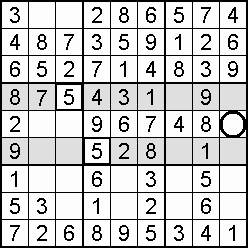
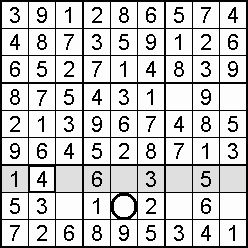
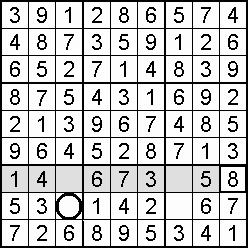
Occasionally, the elimination process may seem to stall, there being no obvious digit on its own anywhere on the grid. The situation calls for the application of a little more reasoning. Consider the arrays filling the band of cells in the following diagram. (A band is a horizontal grouping of three cells - one third of the full grid. A vertical grouping of cells is called a stack.)

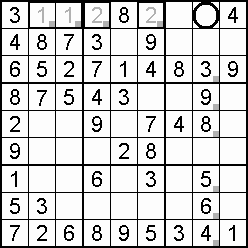
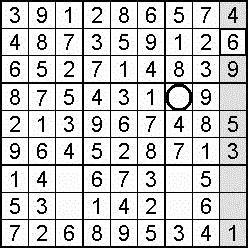
Because the digit 1 has been eliminated from the middle and bottom arrays of Cell 3, the digit can only promote in one of the cell's top arrays. Taking the top row as a whole (across the band), the digit 1 can therefore be eliminated from the top arrays of Cell 1.
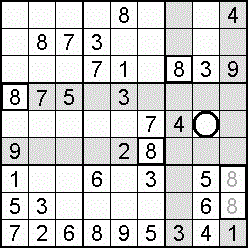
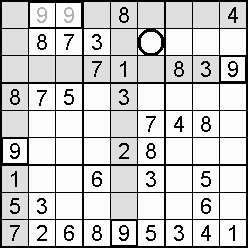
To continue with the logical flow, the digits 2, 3, 9 for Cell 1 will promote only in the top row since they all have been eliminated from the other arrays of the cell. Three digits to satisfy three arrays: this means that the 5, 6, 7, 8 can be eliminated from the top arrays of Cell 1. The 2 then emerges as a digit by itself in the cell's top left array. Also, after its elimation from the top arrays, the 8 in the bottom left array becomes the only digit 8 left in the cell. In the context of the rest of the grid, the promotion of these two arrays is sure to produce a welcome unlocking affect.
Couples and Threesomes
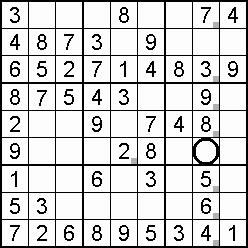
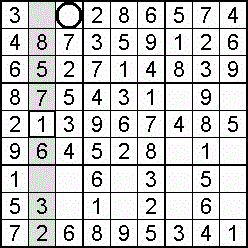
As the solving of the puzzle continues, couples (sometimes called doubles or twins) are bound to occur. Within the same cell, row or column, two arrays will contain just two digits, each array mimicking the other. Since the arrays must be home to both digits (in whatever order) and to no other, then the digits can be eliminated from other arrays in the associated cell, row and column. (A couple can be seen on the primed elimination grid for the worked example: see r1c5 and r1c6.)
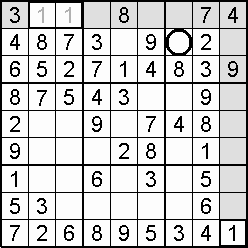
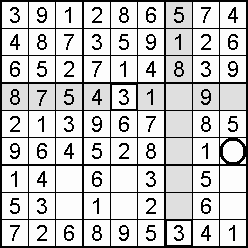
Similarly, though rather less likely, threesomes (or triplets) may emerge. If three arrays in the same cell, row or colummn were for instance to contain only the digits 4, 6, 8 (or if two arrays contained these digits and a third local array held just two of them) then the digits 4, 6, 8 can be removed from other arrays in the domain.
For the most part, couples and threesomes are of limited usefulness, but there will assuredly be the puzzle where one or the other becomes the solver's lifeline.
sudoku made even easier
Make yourself as comfortable as possible.
Use a pencil and have an eraser at hand.
Develop a search order rhythm (for example: array, cell, row, column - going through the digits in order from 1 to 9).
Finish each cycle of search even when a digit by itself is suddenly spotted in another part of the grid (it will still be there when you get to it in due course).
If you are sweeping the grid from top left to bottom right and the digits are not revealing themselves, try a change of direction.
Check every filled cell, row and column by counting through the arrays from 1 to 9.
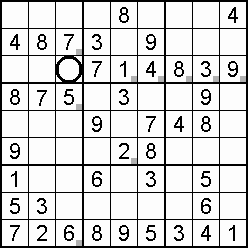
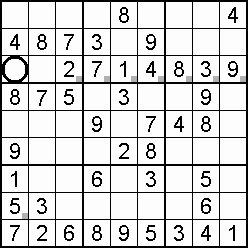
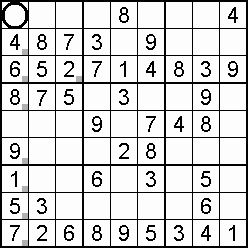
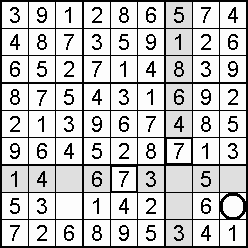
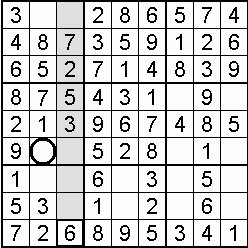
Use of the L-piece greatly diminishes the risk of error on the elimination grid.
Should an error be encountered, recovery may be possible by erasing the elimination marks of all the digits in the faulty array(s) and starting again.
There is no need whatsoever for guesswork (which usually leads only to more guesswork, and on to failure), or for the 'what if?' substitution approach.
Finally, although the puzzle uses digits, these are merely convenient symbols and they have no numerical value as such within the grid. No mathematical knowledge is required for sudoku.
Worked example
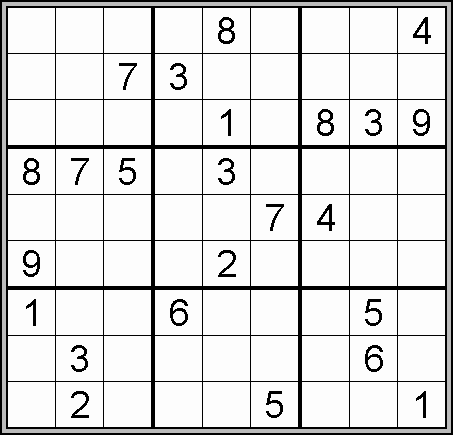
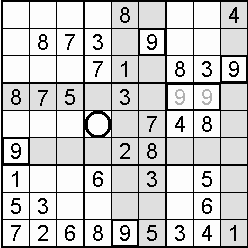
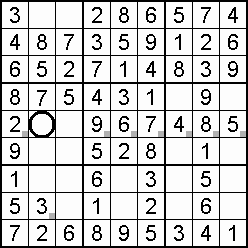
The puzzle
The primed elimination grid

The search
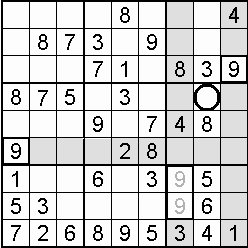
After priming, 182 digits remain on the elimination grid. Searches for digits by themselves can be done to any preference. In the following example, sweeps are conducted from top left to bottom right, examining arrays and cells.
| Digit by itself | Eliminate these digits | ||
| array | digit | context | [r=row c=column] |
| r1c1 | 8 | cell | (r1c1) 2, 4, 6, 9; (r7c1, r9c1) 8 |
| r3c3 | 7 | cell | (r3c3) 1, 2, 3, 4, 6 |
| r1c4 | 1 | cell | (r1c4) 6; (r1c3, r1c7) 1 |
| r3c6 | 3 | cell | (r3c6) 4, 5, 6; (r3c1, r7c6, r8c6, r9c6) 3 |
| r3c5 | 5 | cell | (r3c5) 4, 6; (r6c5, r8c5) 5 |
| r4c3 | 6 | array | (r1c3, r2c3, r4c5, r4c6, r5c1, r5c3, r6c1) 6 |
| r4c5 | 8 | array | (r4c6) 8 |
| r4c6 | 7 | array | (r6c4, r6c6, r7c6, r9c6) 7, row solved |
| r5c7 | 8 | cell | (r5c7) 2, 6 |
| r5c8 | 2 | array | (r3c8, r5c1, r5c3, r5c9, r6c7, r6c8, r6c9, r7c8) 2 |
| r5c3 | 5 | array | (r5c1, r6c1, r7c3, r9c3) 5 |
| r5c1 | 9 | array | (r3c1, r6c1, r6c2) 9 |
| r3c2 | 9 | cell | (r3c2) 1, 2, 4; (r3c7, r3c8) 9 |
| r3c8 | 1 | array | (r2c7, r3c7, r3c9, r6c8, r9c8) 1 |
| r1c7 | 9 | cell | (r1c7) 2, 4, 6; (r7c7, r9c7) 9 |
| r5c9 | 6 | array | (r3c9, r6c7, r6c9) 6, row solved |
| r3c9 | 2 | array | (r3c1, r3c7) 2 |
| r1c3 | 2 | cell | (r1c3) 4; (r7c3) 2 |
| r6c8 | 7 | array | (r6c7, r7c8, r9c8) 7 |
| r7c3 | 3 | array | (r2c3, r7c1, r7c4, r7c7, r9c1, r9c3) 3 |
| r2c1 | 3 | cell | (r2c1) 4, 6 |
| r3c1 | 6 | cell | (r3c1) 4; (r3c7) 6 |
| r3c7 | 4 | array | (r2c7) 4, row solved |
| r2c7 | 6 | array | cell solved |
| r9c2 | 8 | cell | (r9c2) 1, 4; (r9c6) 8 |
| r7c6 | 8 | cell | (r7c6) 5, 9 |
| r8c5 | 4 | array | (r1c5, r8c2, r8c6, r9c6) 4 |
| r1c5 | 6 | array | (r1c6, r6c5) 6 |
| r1c6 | 4 | array | cell, row solved |
| r6c5 | 9 | array | (r6c6) 9, column solved |
| r8c6 | 5 | array | (r6c6, r7c4, r8c4, r9c4, r9c6) 5 |
| r6c6 | 6 | array | (r6c4, r9c6) 6 |
| r6c4 | 5 | array | cell solved |
| r7c4 | 7 | array | (r7c7, r9c4) 7 |
| r7c7 | 2 | array | (r7c1, r8c7) 2 |
| r7c1 | 5 | array | (r7c8, r9c1) 5 |
| r7c8 | 9 | array | (r9c8), row solved |
| r8c2 | 2 | cell | (r8c2) 1; (r6c2) 2 |
| r6c2 | 4 | array | (r2c2, r6c1) 4 |
| r2c2 | 1 | array | (r2c3) 1, column solved |
| r2c3 | 4 | array | (r9c3) 4, cell, row solved |
| r6c1 | 2 | array | cell solved |
| r9c1 | 4 | array | column solved |
| r9c3 | 1 | array | (r9c7, r9c9) 1, cell, column solved |
| r8c4 | 3 | array | (r8c7, r9c4) 3 | r9c4 | 6 | array | column solved |
| r9c6 | 9 | array | cell, column solved |
| r8c7 | 1 | array | (r6c7) 1, row solved |
| r6c7 | 3 | array | (r6c9, r9c7) 3 |
| r6c9 | 1 | array | cell, row solved |
| r9c7 | 7 | array | column solved |
| r9c8 | 5 | array | column solved |
| r9c9 | 3 | array | cell, row, column, grid solved |
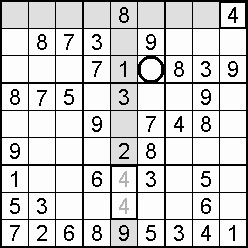
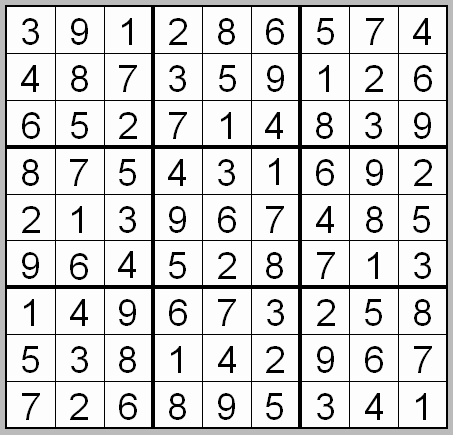
The completed puzzle

top
elimination grid
L-piece
sudoku made quicker
3 worked examples
urbanrim.org.uk
© 2005, 2006
Please mention this source in any reproduction